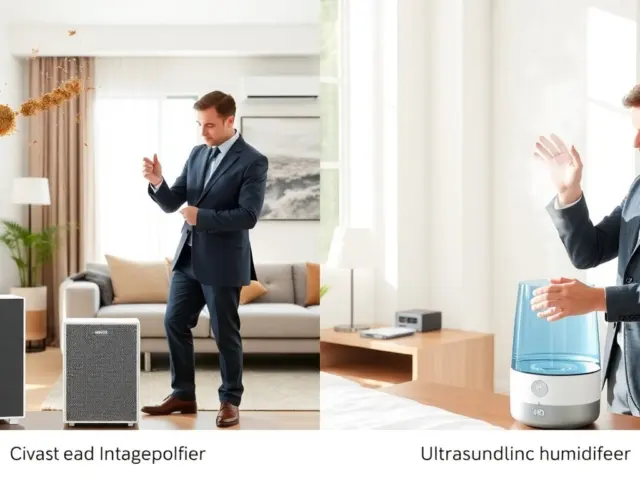
air purifier vs dehumidifier is a common choice for home air quality. The reader needs a clear guide. This article explains how each device works, what each removes, the health effects, when to pick one or both, and practical trade-offs. The reader will learn to match a device to home conditions and budget. The text uses clear steps and plain sentences.
Key Takeaways
- An air purifier removes airborne particles, allergens, smoke, and odors using HEPA and activated carbon filters for cleaner indoor air.
- A dehumidifier reduces indoor humidity by removing moisture, which helps prevent mold growth, condensation, and dust mite infestations.
- Choose an air purifier when air quality issues involve particles and odors, a dehumidifier for high humidity or visible dampness, or both if your home has combined problems.
- Match the device capacity to room size and consider noise, energy use, maintenance, and cost for effective long-term use.
- Regular maintenance like filter replacement for purifiers and water tank emptying for dehumidifiers is essential to ensure their performance and health benefits.
How Each Device Works: Basic Mechanisms Explained
How Air Purifiers Remove Particles And Gases
An air purifier pulls room air through filters. A fan forces air through a prefilter and then a HEPA filter. The HEPA filter traps particles as small as 0.3 microns. Many units add activated carbon to adsorb odors and some gases. Some models use UV light or ionizers to reduce microbes. The machine returns cleaner air to the room. Users should replace filters on the maker’s schedule.
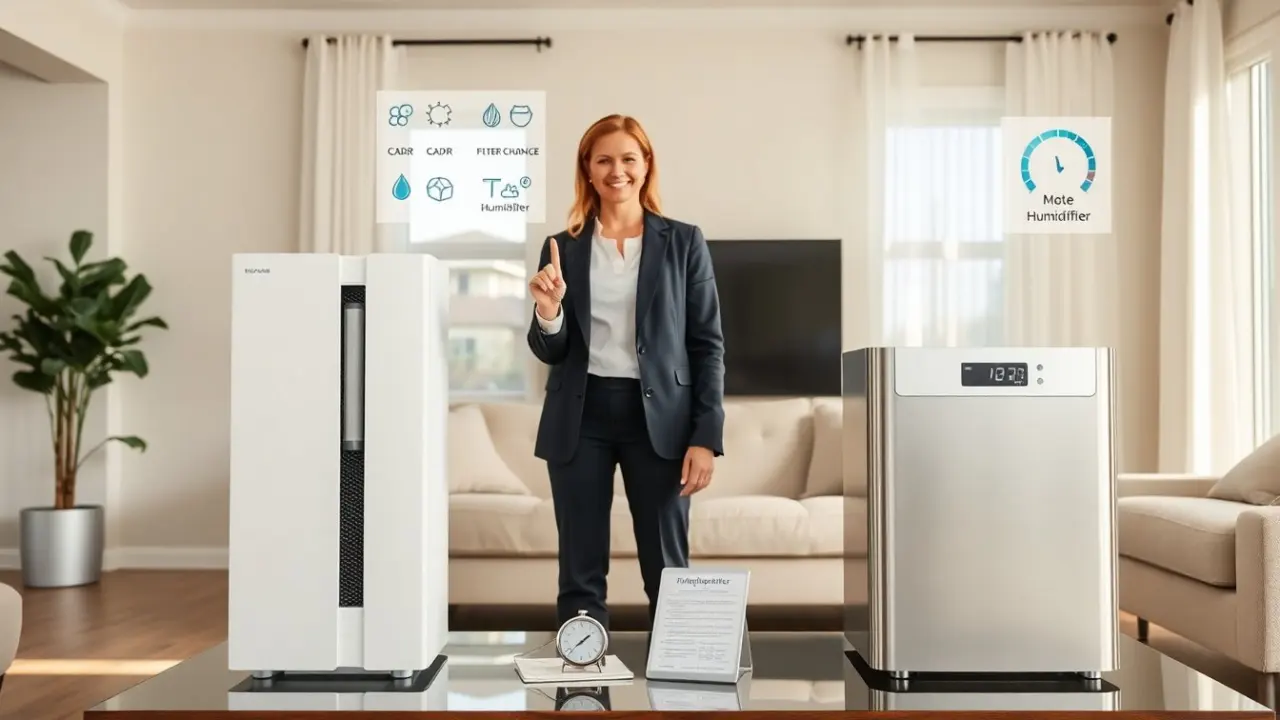
Beyond the basic filter stack, design matters: intake placement, fan speed, and the presence of a prefilter to catch large particles affect overall performance and filter life. CADR ratings indicate how quickly a purifier can clean air in a given room; matching CADR to room volume gives better results than relying on size alone. Portable purifiers are effective for single rooms, while whole-house solutions integrate with HVAC systems and treat air circulated through ducts.
How Dehumidifiers Remove Moisture And Lower Humidity
A dehumidifier pulls moist air into the unit. A cold coil condenses water from the air. The unit collects water in a tank or drains it away. The drier air passes over a warm coil and returns to the room. A built-in humidistat controls relative humidity. The machine lowers room moisture and reduces condensation on windows and walls.
There are different types of dehumidifiers: refrigerant/compressor units work well in moderate to warm conditions, while desiccant models perform better at lower temperatures. Continuous drain options or gravity/drain hose setups reduce the need to empty tanks manually. Humidistats allow you to set a target humidity and run cycles to maintain it rather than running continuously, saving energy and reducing wear.
What Each Device Actually Removes From Your Home
An air purifier removes dust, pollen, pet dander, smoke particles, and many airborne allergens. A HEPA filter removes most fine particles. Activated carbon removes many volatile organic compounds (VOCs) and odors, though not all gases. A dehumidifier removes water vapor from the air. Lower humidity reduces dampness and surface condensation. The dehumidifier does not remove fine smoke particles or VOCs. The devices serve different removal goals. Some homes benefit from both an air purifier vs dehumidifier approach, depending on the problem.
Practical distinctions: if your primary concern is visible particles, sneezing, or smoke, an air purifier targets those by capturing particulates. If you notice musty smells, wet stains, condensation on windows, or frequent mold growth, lowering humidity with a dehumidifier addresses the root cause. In many real-world situations both issues appear together — for example, a damp basement can release mold spores into the air, so a combined strategy reduces spore release (dehumidifier) and airborne spores that remain suspended (purifier).
Health And Home Benefits: Allergies, Asthma, Mold, And Odors
An air purifier reduces airborne allergens that trigger sneezing and eye irritation. It can help people with mild to moderate allergies and some asthma symptoms. The purifier lowers particle counts that can inflame airways. A dehumidifier reduces mold growth by lowering humidity. Mold spores need moisture to grow. The dehumidifier also reduces dust mite populations because mites need humidity above about 50% RH. Odors from cooking and pets respond better to activated carbon filters in air purifiers. For combined issues, both devices reduce different risks: the air purifier cuts airborne particles and gases, and the dehumidifier cuts moisture-driven problems.
How this translates to daily life: reducing airborne particles can decrease the frequency of allergy symptoms and reduce exposure to combustion byproducts such as tobacco smoke or wood smoke. Controlling humidity prevents the conditions that let mold take hold, protecting building materials, clothing, and stored items. For people with respiratory conditions, combining humidity control with particle removal often produces the most noticeable symptom relief. However, neither device replaces proper cleaning, ventilation, or remediation of leaks and water intrusion.
When To Choose An Air Purifier, A Dehumidifier, Or Both
Choose an air purifier when the primary problem is airborne particles, smoke, pollen, or persistent odors. Choose a dehumidifier when the primary problem is high indoor humidity, condensation, dampness, or visible mold. Choose both when the home has both high particle counts and high humidity. For example, a basement with mold and dust benefits from a dehumidifier plus an air purifier with HEPA and carbon filters. A living room with smokers or heavy pollen seasons benefits mainly from a high-CADR air purifier. The homeowner should test indoor humidity and inspect for visible mold or damp stains before buying.
Decision checklist to help pick: measure relative humidity with an inexpensive hygrometer; if humidity regularly sits above comfortable levels or you see condensation, prioritize a dehumidifier. Use simple particle monitors or note symptoms that correlate with indoor activity (e.g., worse during pollen season or after cooking) to justify an air purifier. If both humidity and particle concerns are present, start with remediation of leaks and ventilation improvements, then add a dehumidifier to stop ongoing moisture problems and an air purifier to reduce suspended particles.
Practical Considerations: Size, Noise, Energy Use, Cost, And Maintenance
Size: Buyers should match unit capacity to room square footage. Air purifiers list CADR (clean air delivery rate). Dehumidifiers list pints removed per day at a set humidity and temperature. Noise: Air purifiers produce fan noise that rises with speed. Dehumidifiers create fan and compressor noise. Energy: Modern ENERGY STAR dehumidifiers use less power than older models. High-CADR purifiers can use moderate electricity at top speed. Cost: Upfront cost for a good air purifier with HEPA and carbon ranges from mid to high. Dehumidifiers cost vary by capacity and functions. Maintenance: Air purifiers need filter changes and occasional cleaning. Dehumidifiers need periodic tank emptying or a drain setup and filter cleaning. Buyers should budget for replacement filters and electricity. Placement: Place purifiers where airflow is unobstructed. Place dehumidifiers centrally in the damp area or in the basement.
Additional practical tips: – Maintenance routine: check and clean prefilters monthly, replace HEPA and carbon filters according to manufacturer guidance, and clean dehumidifier coils and empty or set up a continuous drain regularly to avoid bacterial growth. – Noise and operation: run purifiers and dehumidifiers on lower speeds overnight if noise is an issue, or use units with dedicated “night” modes. Timers and smart controls can reduce runtime and electricity costs. – Energy and cost savings: consider sizing properly rather than oversizing; a unit that is well matched to the space will run efficiently. Use a room-level approach — one well-placed purifier for a bedroom is often better than a smaller unit scattered across multiple rooms. – Placement and airflow: avoid placing purifiers behind furniture or in corners where intake is restricted; for dehumidifiers, position near the moisture source (basement corners, laundry rooms) and ensure enough clearance for intake and exhaust. – Long-term thinking: address sources of pollution and moisture first (vent kitchen and bath fans, fix leaks, reduce indoor smoking) so devices serve as support tools rather than sole solutions.