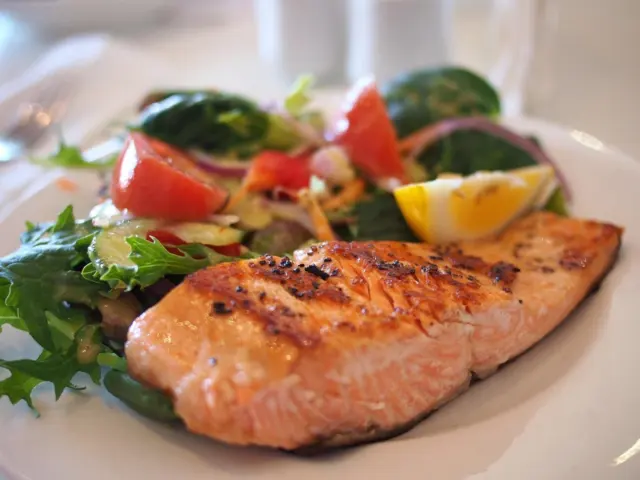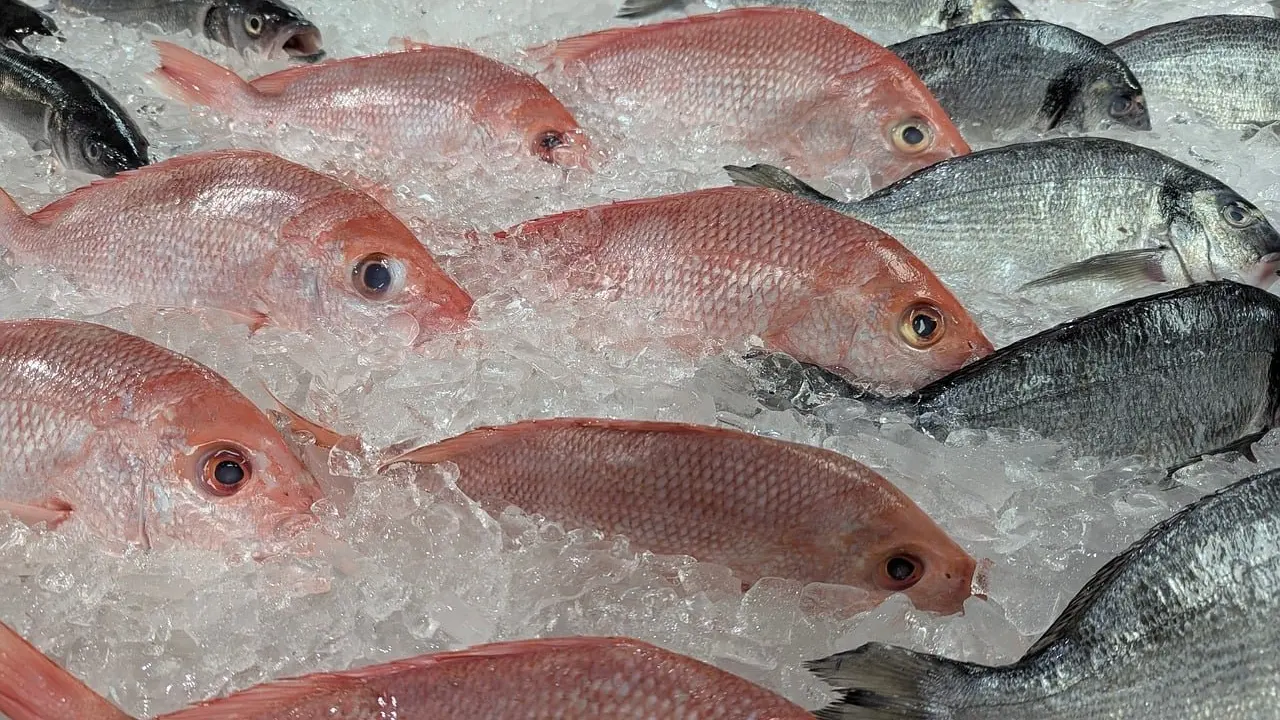
Use this mercury in fish chart guide by deciding who is eating first. Then choose low-mercury fish such as salmon, sardines and canned light tuna most often, and limit swordfish, shark and bigeye tuna.
The sections below follow that decision: who is eating, which fish, and how often. For a ranked list, start with which fish have the most mercury. The FDA concentration chart sits near the end of this page.
Start with who is eating
The same plate of fish matters differently to different people, so the first branch is the eater, not the fish. The EPA’s guidelines for eating fish that contain mercury were revised in July 2019, updating the joint FDA and EPA advice issued in January 2017. That advice is aimed at women who are or might become pregnant, at breastfeeding mothers and at young children. Everyone else can use the same logic with more room to move. Pick your path below.
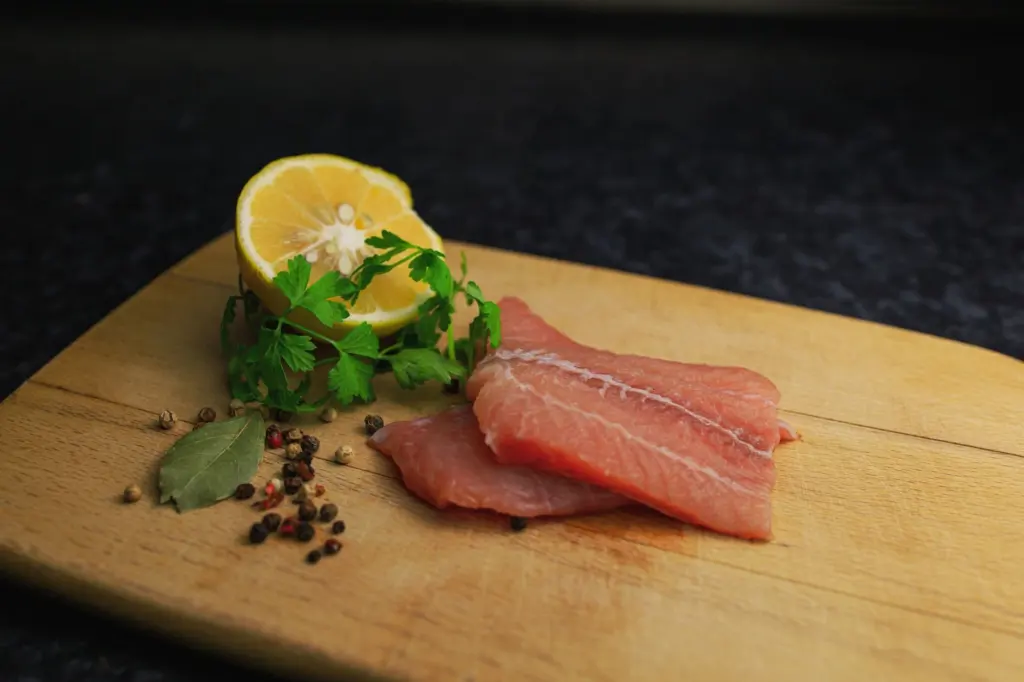
- Pregnant, planning a pregnancy or breastfeeding. You need the strictest fish-by-fish approach, covered in the pregnancy section below and in more depth in safe fish to eat while pregnant.
- Feeding a toddler or young child. Portions are smaller and the high-mercury list matters more. Read the weekly serving section below, then how much fish can kids eat mercury.
- Other adults who eat fish most weeks. Your main lever is swapping species rather than eating less fish. The weekly ceiling is covered in how much fish is safe to eat per week.
- Heavy canned tuna eaters. The type of tuna matters more than the can. See the tuna section below and how much canned tuna is safe to eat per week.
- Someone who likes swordfish or shark steaks. These sit at the top of the FDA data. Start with is swordfish high in mercury.
Whichever branch you take, the underlying advice is the same: eat mainly fish types that are low in mercury and limit the types that typically run higher. The rest of this page turns that sentence into specific species, forms and amounts.
What mercury exposure from fish depends on
Mercury exposure from fish depends on two things you control: the type of fish and the amount you eat. The EPA states that the degree of exposure depends on both the amount and the type of fish eaten. That is the whole logic of a mercury chart. The species sets the concentration, and your servings set how much of it reaches you.
The form of mercury matters as well. The Victorian Government’s Better Health Channel guidance on mercury in fish says the organic form of mercury, particularly methylmercury, is the most dangerous. Methylmercury is the form behind fish-eating advice, which is why the advice focuses on species rather than on cooking or preparation. For background on how mercury ends up in fish in the first place, see how does mercury get into fish.
Frequency changes the picture. The same Victorian guidance says a high-mercury fish is only a potential problem when it is eaten regularly, because regular eating causes a build-up. It also says the body can and does get rid of mercury over time, and that safe levels are exceeded only with regular high-mercury intake over many months. In practice that means one swordfish dinner is not the pattern the guidance worries about, while a weekly habit of high-mercury species is.
None of this is a reason to give up fish. The EPA describes fish as important in a healthy diet and as a lean, low-calorie source of protein, with mercury becoming a concern only at sufficiently high levels. The practical aim is to change which fish you buy, not to stop buying fish.
Criteria for choosing a fish
Four criteria do most of the work when you choose fish, and they work in this order. Check them at the counter or on the menu, and the chart below becomes a backup rather than a rulebook.
- Species. This is the biggest lever. In the FDA’s monitoring data, the average mercury concentration in swordfish is far above that of fresh or frozen salmon, and sardines sit lower still. If you only remember one thing, remember the species ranking.
- Form. Tuna shows that form matters. Canned light, canned albacore, fresh yellowfin, fresh albacore and bigeye all have different averages, so “tuna” on its own is not enough information to decide.
- Who is eating. The same fish that suits a healthy adult may not suit a pregnant woman or a young child. Advice for those groups is more cautious, and portions for children are smaller.
- How often. Because mercury builds up with regular eating, a high-mercury fish eaten occasionally is a different decision from the same fish eaten every week. Spread your choices across several species instead of relying on one.
If you are comparing two fish at the shop and cannot find a number, default to the lower-mercury family: salmon, sardines, shellfish and canned light tuna. Then move up the ladder only if you know the species and are not in a group that needs extra care.
Fish to limit or skip
Swordfish and shark are the clearest fish to limit, and both appear at the top of the FDA’s commercial fish data. The longer ranking is in worst fish for mercury.
Swordfish and shark
The FDA’s mercury levels in commercial fish and shellfish report a mean of 0.995 ppm for swordfish across 636 samples. Its median was 0.87 ppm and its highest reading was 3.22 ppm. Shark had a mean of 0.979 ppm across 356 samples, a median of 0.811 ppm and a maximum of 4.54 ppm, the highest single reading in the set. Because the maximum is far above the average, an individual steak can be well above the typical value. That is a reason not to treat the average as a safe ceiling.
If you are pregnant, planning a pregnancy or feeding a young child, treat these as fish to skip. Other adults should treat them as occasional fish rather than a staple. A fuller look at one of them is in is swordfish high in mercury.
Orange roughy and the rest of the high-mercury list
Orange roughy averaged 0.571 ppm across 81 samples in the FDA data, with a median of 0.562 ppm and a maximum of 1.12 ppm. It is lower than swordfish and shark but well above salmon, canned light tuna and sardines. Australian guidance lists a wider set of high-mercury fish: shark, ray, swordfish, barramundi, gemfish, orange roughy, ling and southern bluefin tuna. Some of those species are sold mainly in Australia, so the list is a useful reminder that high-mercury fish exist in every market. If you travel or shop at specialist counters, check the species name before you buy.
Tuna: the fish that needs a closer look
Tuna is the most common fish to get wrong, because the word covers products with very different mercury levels. Canned light tuna is toward the low end, while fresh bigeye is among the higher ones. A peer-reviewed Polish analysis of fish products found the highest mercury concentration in tuna. In that study, tuna exceeded the hazard threshold, with an estimated hazard quotient above 1, while the other fish analysed were considered safe. The full text is in the open-access paper on PubMed Central.
Canned tuna
According to the FDA’s table, canned light tuna had a mean of 0.126 ppm and a median of 0.077 ppm across 545 samples. Canned albacore had a mean of 0.350 ppm and a median of 0.338 ppm across 451 samples. For regular lunches, canned light is the better pick and canned albacore is the one to ration. Averages do not describe every can, though. The highest canned light reading was 0.889 ppm, which is a reason to vary your fish instead of eating the same tin every day. The amounts that suit each group are worked through in how much canned tuna is safe to eat per week.
Fresh and frozen tuna, and sushi
Fresh and frozen tuna is a steeper choice. In the FDA data, yellowfin averaged 0.354 ppm across 231 samples, with a maximum of 1.478 ppm. Fresh or frozen albacore averaged 0.358 ppm across 43 samples, and bigeye averaged 0.689 ppm across 21 samples, with a maximum of 1.816 ppm. Bigeye is the tuna to treat most cautiously, though its sample is small, so read it as a signal rather than a precise figure. If you want to know which one is the better steak, which tuna has the least mercury compares them.
The same species logic applies when you order raw fish. A menu full of tuna is a different decision from one built around salmon, and mercury in sushi applies the ranking to what to order and what to skip.
Lower-mercury choices and swaps
Salmon, sardines and shellfish are the easiest swaps for anyone trying to cut mercury without cutting fish. In the FDA data, fresh or frozen salmon had a mean of 0.022 ppm across 94 samples, with a maximum of 0.19 ppm. Canned salmon averaged 0.014 ppm across 19 samples, and sardines averaged 0.013 ppm across 90 samples, with a maximum of 0.083 ppm. Those averages sit far below swordfish, shark and bigeye. Australian guidance gives a similar list of lower-mercury examples: prawns, lobsters, oysters, salmon and canned tuna.
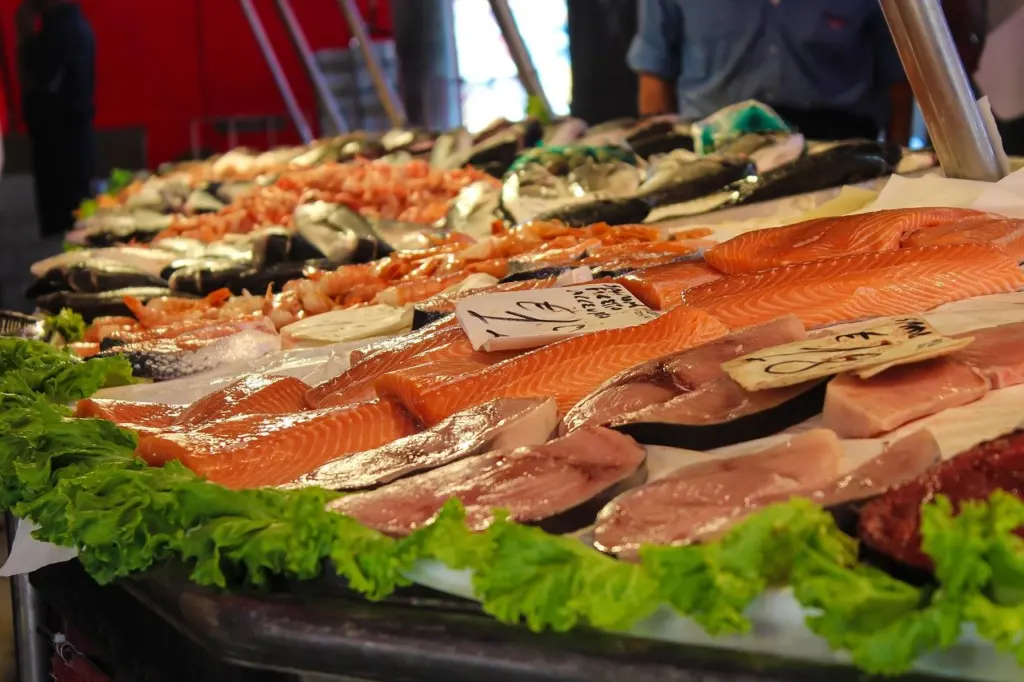
Here are swaps that follow from the data:
- Instead of swordfish steak, choose salmon fillet. It gives you a firm, meaty fish at a mean concentration that is a small fraction of swordfish.
- Instead of fresh bigeye or a tuna steak, choose salmon or sardines. Both sit at the low end of the FDA table.
- Instead of canned albacore, choose canned light tuna or canned salmon for everyday meals.
- Instead of shark, choose prawns, oysters or another lower-mercury shellfish from the Australian examples.
Salmon is the swap most readers ask about. The wild-versus-farmed comparison is covered in does salmon have mercury.
Weekly servings by group
Weekly fish advice depends on the group, and the clearest published breakdown in this evidence comes from Australia. The Victorian Better Health Channel summarises the Australian guidelines, which were revised in 2004 and again in 2020. Serves are defined by weight for each group:
- Pregnant women and women planning a pregnancy: two to three serves a week of most fish, where one serve is 150g. Shark or billfish is limited to one serve per fortnight.
- Children up to 6 years: two to three serves a week of most fish, where one serve is 75g. Shark or billfish is also limited to one serve per fortnight.
- The rest of the population: two to three serves a week of most fish, where one serve is 150g. Shark or billfish is limited to one serve per week.
These are ceilings for the group, not targets to hit every week. They also reflect Australian serve sizes, so US readers should compare them with the FDA and EPA advice summarised on the EPA guidelines page. If your meals are mostly salmon, sardines or canned light tuna, you are well inside the spirit of that advice. If you eat high-mercury species, the shark and billfish limits are the numbers that matter most. More on the adult ceiling is in how much fish is safe to eat per week, and the child portions are worked through in how much fish can kids eat mercury.
Pregnancy, breastfeeding and young children
Yes, mercury in fish matters during pregnancy, and it matters most in the womb. The Better Health Channel says the unborn baby is most sensitive to the effects of mercury, particularly during the third and fourth months of gestation. That is why advice for pregnant women and women planning a pregnancy is stricter than advice for other adults.
The Australian guidance tells pregnant women, women planning a pregnancy and young children up to 6 years to avoid high-mercury fish. Its serving table sets the upper limit for shark or billfish at one serve per fortnight for these groups. The safer reading is to treat that as a ceiling, not a recommendation. Swordfish and shark are easy to replace with salmon, sardines or shellfish, so there is little reason to spend the allowance.
Breastfeeding is treated differently. The same Victorian guidance says the levels of mercury in a mother’s milk are not high enough to be a risk to the infant. The US advice from the EPA still covers breastfeeding mothers as a group, so choosing lower-mercury fish while breastfeeding remains a sensible default.
For a practical shortlist of fish by species, see safe fish to eat while pregnant. Parents of toddlers can work from the smaller serve size above and the species guidance in how much fish can kids eat mercury.
Ways to lower mercury exposure
The most effective way to lower mercury exposure is to change what you buy, because preparation will not change it. The steps below are in order of impact.
- Swap the species. Move from swordfish, shark, orange roughy and bigeye to salmon, sardines, shellfish or canned light tuna. This single step moves you furthest in the FDA data.
- Vary your fish. Because mercury builds up with regular eating of the same high-mercury type, rotating species keeps any one fish from becoming a habit.
- Keep high-mercury fish occasional. Safe levels are exceeded through regular high-mercury intake over many months, so an occasional meal is a different matter from a routine.
- Do not rely on cooking. The Better Health Channel says food processing, preparation and cooking techniques do not significantly reduce the amount of mercury in fish. The specifics are covered in does cooking fish remove mercury.
- Allow time. The body can and does get rid of mercury over time, so a change in habits helps. If you are worried about heavy past intake, mercury poisoning from fish symptoms explains what to look for.
Two edges sit outside the commercial fish chart. Fish you catch yourself in rivers and lakes are not part of the FDA’s commercial table, and local advisories apply to them, as set out in is lake fish safe to eat mercury. Supplements are a separate question again, answered in does fish oil contain mercury.
Mercury in fish chart: FDA concentrations at a glance
The chart below puts the main commercial fish on one scale so you can compare them directly. Mean is the average reading, median is the middle reading, and highest is the largest single sample. A mean that sits well above the median signals that a few high samples pull the average up, as with swordfish and canned light tuna.
| Fish | Mean (ppm) | Median (ppm) | Highest (ppm) | Samples | Planning use |
|---|---|---|---|---|---|
| Swordfish | 0.995 | 0.87 | 3.22 | 636 | Limit; highest mean in this table |
| Shark | 0.979 | 0.811 | 4.54 | 356 | Limit; highest single reading in this table |
| Tuna, fresh or frozen bigeye | 0.689 | 0.56 | 1.816 | 21 | Treat as a higher-mercury tuna; small sample |
| Orange roughy | 0.571 | 0.562 | 1.12 | 81 | Limit |
| Tuna, fresh or frozen albacore | 0.358 | 0.36 | 0.82 | 43 | Occasional choice; small sample |
| Tuna, fresh or frozen yellowfin | 0.354 | 0.311 | 1.478 | 231 | Occasional choice; wide spread of readings |
| Tuna, canned albacore | 0.350 | 0.338 | 0.853 | 451 | Ration rather than eating daily |
| Tuna, canned light | 0.126 | 0.077 | 0.889 | 545 | Better everyday tuna; vary your fish |
| Salmon, fresh or frozen | 0.022 | 0.015 | 0.19 | 94 | Strong everyday swap |
| Salmon, canned | 0.014 | 0.010 | 0.086 | 19 | Strong everyday swap; small sample |
| Sardine | 0.013 | 0.010 | 0.083 | 90 | Lowest mean in this table |
These figures come from the FDA’s mercury levels in commercial fish and shellfish, where readings below the detection limit of 0.01 ppm are marked ND.
Use the chart as a ranking, not a pass mark. A low average does not guarantee every fillet is low, and a high average does not mean every fish is high. The size of each sample matters too: bigeye rests on far fewer samples than canned light tuna, so its figures are a rougher guide. If a fish you eat is missing from the chart, ask for the species name and compare it with the closest entry.
Frequently asked questions
Which fish are highest in mercury?
Swordfish and shark top the FDA data, with shark producing the largest single reading. Orange roughy and fresh bigeye tuna also run high. Australian guidance adds ray, barramundi, gemfish, ling and southern bluefin tuna to its high-mercury list, as set out by the Better Health Channel.
How much fish is safe to eat each week?
It depends on the group and the species. Australian guidance allows two to three serves a week of most fish for pregnant women, young children and other adults, with smaller serves for children. It sets tighter limits for shark or billfish, per the Better Health Channel. The EPA adds that exposure depends on both the amount and the type of fish.
Is mercury in fish dangerous during pregnancy?
It can be, because an unborn baby is most sensitive to mercury, particularly in the third and fourth months of gestation. Choosing salmon, sardines and shellfish over swordfish and shark is the practical response, according to Victoria’s Better Health Channel.
How do I lower mercury exposure?
Eat mainly fish that are low in mercury and limit the types that typically run higher, as the EPA advises. Cooking will not help, so swapping the species is the step that works.
Is canned light tuna a low-mercury choice?
Relative to other tuna, yes. The FDA reports a mean of 0.126 ppm for canned light tuna, compared with 0.350 ppm for canned albacore, in its commercial fish table. Individual cans vary, so rotate it with other fish.