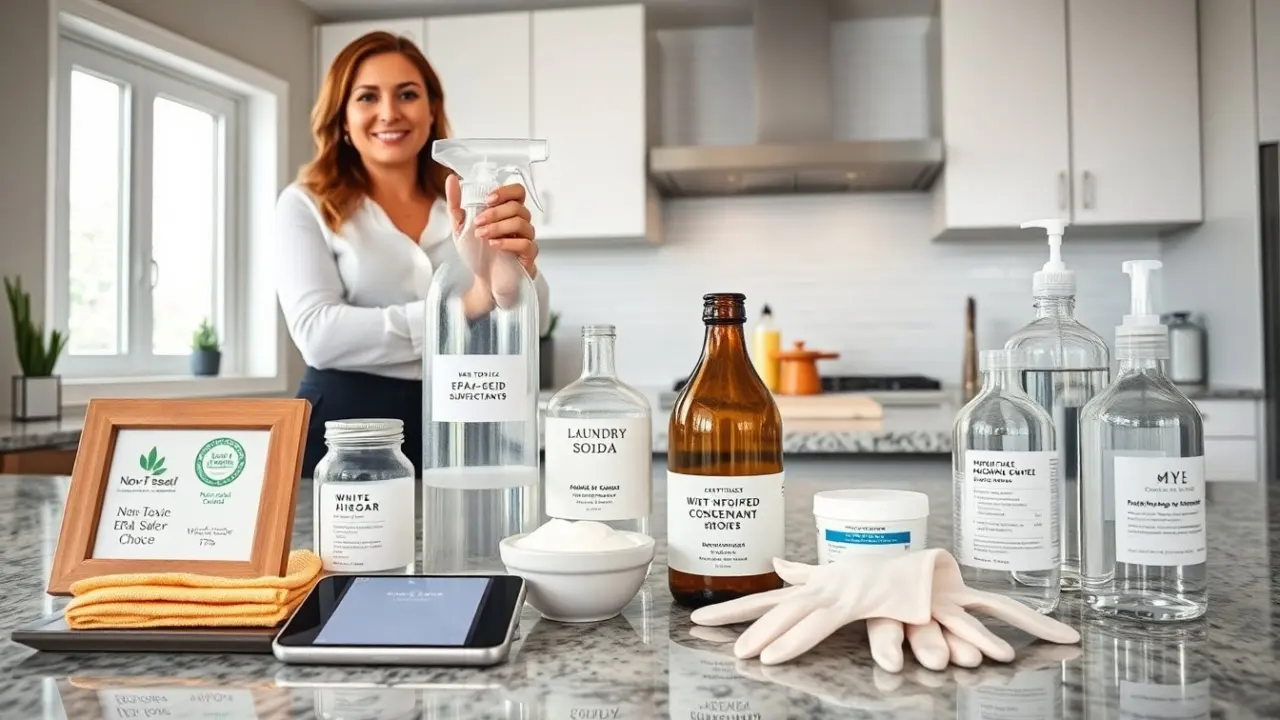
The best non toxic cleaning products reduce chemical risks in the home. They protect skin, lungs, and drinking water. They lower indoor air pollution and harm to pets. They often clean as well as conventional products. This guide lists clear choices, simple label tips, and do-it-yourself recipes. It helps readers pick the best non toxic cleaning products for each room and use.
Key Takeaways
- Choosing the best non toxic cleaning products protects health by avoiding harmful chemicals like ammonia and bleach.
- Look for clear ingredient lists and certifications such as Green Seal or EPA Safer Choice to ensure product safety.
- Start with versatile non toxic products like all-purpose cleaners, dish soap, and laundry detergent for broad household use.
- DIY cleaners using vinegar, baking soda, and essential oils offer safe and customizable cleaning solutions when used correctly.
- Transition gradually by replacing one conventional product at a time, storing all cleaners safely, and properly disposing of old chemicals.
- Non toxic cleaning products often clean as effectively as conventional ones while reducing indoor pollution and protecting pets and surfaces.
Why Choose Non-Toxic Cleaning Products (Health, Environment, Performance)
People choose the best non toxic cleaning products to protect health. They avoid common irritants such as ammonia, chlorine, and phthalates. They lower the chance of skin rashes and breathing problems. People also choose them to reduce household chemical discharge into water systems. Many non-toxic options perform well on grease, soap scum, and fingerprints. They often use plant-derived surfactants and simple acids to remove soils. Choosing safer cleaners can also cut long-term costs by preventing damage to finishes and fabrics.
Beyond individual health, choosing the best non toxic cleaning products matters for household ecosystems: septic systems, municipal wastewater treatment, and aquatic life can all benefit from lower loads of persistent chemicals. For families with children, older adults, or pets, reducing residues left on floors and countertops minimizes chronic low-level exposures. From a performance perspective, many non-toxic formulations now include enzymes or oxygen-based stain removers that match traditional cleaners for everyday tasks. The decision is therefore often a balance of efficacy, safety, and value rather than a strict trade-off.
How To Read Labels: Ingredients To Avoid And Certifications That Matter
Buy products with clear ingredient lists. Avoid labels that hide ingredients behind vague phrases such as “fragrance” or “proprietary blend.” Watch for these ingredients: sodium hypochlorite (bleach), ammonia, triclosan, quaternary ammonium compounds (quats), 2-butoxyethanol, and synthetic fragrances. Look for certifications that verify safety. Green Seal, EPA Safer Choice, and Ecologo provide independent review. Seek products that list surfactants, solvents, and preservatives by name. Choose items that use biodegradable surfactants and avoid preservatives linked to hormones. Check for cruelty-free and allergen notes when relevant.
When comparing labels, note the order of ingredients: components listed first are present in higher concentrations. Also pay attention to usage instructions and recommended dilution ratios — a safe product used incorrectly (too concentrated or applied to delicate surfaces) can still cause problems. Certifications are helpful shorthand but read the fine print: some seals certify environmental impact while others focus primarily on human toxicity or biodegradability. If a product claims “plant-based” or “natural,” look for specifics about which ingredients are plant-derived and whether any synthetic stabilizers are included.
Top Ready-Made Non-Toxic Picks — What To Buy First
Shoppers often start with a few versatile bottles. They pick an all-purpose cleaner, a concentrated cleaner, dish soap, and a laundry detergent. These items cover most cleaning tasks. The best non toxic cleaning products have transparent labels and independent certification. They use plant-based surfactants, citric acid, or lactic acid for de-scaling, and buffered pH for surfaces. Start with a proven all-purpose spray and a concentrated cleaner to dilute as needed. Add a mild dish soap and a phosphate-free laundry option. These four purchases reduce exposure across the home.
To choose among ready-made options, test one small area first to confirm compatibility with finishes and fabrics. For kitchens, prioritize a grease-cutting all-purpose and a dish soap that removes oils without harsh solvents. For bathrooms, select a cleaner suited to soap scum and mineral deposits that lists mild acids like citric or lactic acid rather than hydrochloric or phosphoric acids. For laundry, pick a phosphate-free, fragrance-free detergent if anyone in the household has sensitive skin. Having separate concentrated solutions for floors, glass, and wood can simplify use and prevent accidental damage.
Simple DIY Non-Toxic Cleaners: Recipes Using Vinegar, Baking Soda, And Essential Oils
DIY cleaners let people control ingredients. They mix white vinegar and water (1:1) for windows and general surfaces, but they avoid vinegar on stone and waxed wood. They make a paste of baking soda and water to scrub sinks and ovens. For disinfecting, they use rubbing alcohol (70%) on nonporous surfaces. They add a few drops of essential oil for scent, but they test for allergy first. They never mix vinegar and bleach or vinegar and hydrogen peroxide. They label DIY bottles and store them safely.
Practical recipes: – All-purpose cleaner (nonstone surfaces): 1 cup water + 1 cup white vinegar + 10–15 drops of a tested essential oil (optional). Use in a spray bottle and patch test on finishes. – Deodorizing scrub: 1/2 cup baking soda + enough water to form a paste; apply to stained sinks or oven spots, let sit, then scrub and rinse. – Glass cleaner: 2 cups water + 1/4 cup white vinegar + 1 tablespoon rubbing alcohol (optional) to speed drying. – Quick disinfectant for small items: use 70% isopropyl alcohol applied with a cloth; allow full contact time and air drying. Note: Do not use acids like vinegar on natural stone (granite, marble) or waxed surfaces; use pH-neutral cleaners instead. When adding essential oils, use small amounts, as concentrated oils can irritate sensitive people and pets.
How To Transition Your Home: Safe Use, Storage, And When To Keep Conventional Products
People transition gradually to the best non toxic cleaning products to avoid waste. They replace one product per shopping trip. They keep a small supply of conventional products for heavy-duty tasks such as mold or blood cleanup when required. They always read manufacturer instructions for dilution and contact time. They store cleaners in locked cabinets or high shelves away from children and pets. They use original labels or add clear custom labels. They dispose of old chemicals at local hazardous waste events and follow local disposal rules.
Practical transition steps: make an inventory of current cleaners to identify which tasks must be covered (degreasing, disinfecting, descaling, stain removal). Replace the product that is used most frequently first — often the all-purpose cleaner — then evaluate effectiveness over several weeks. Keep a short log of what works and what doesn’t so you can swap in different non-toxic options as needed. For safety, separate flammable items (rubbing alcohol, concentrated solvents) from nonflammable ones, keep lids tightly closed, and store products in a cool, dry place. If a situation truly requires a conventional product (e.g., certain labelling requirements for blood-borne pathogens), follow professional guidance and limit its use to those specific tasks.