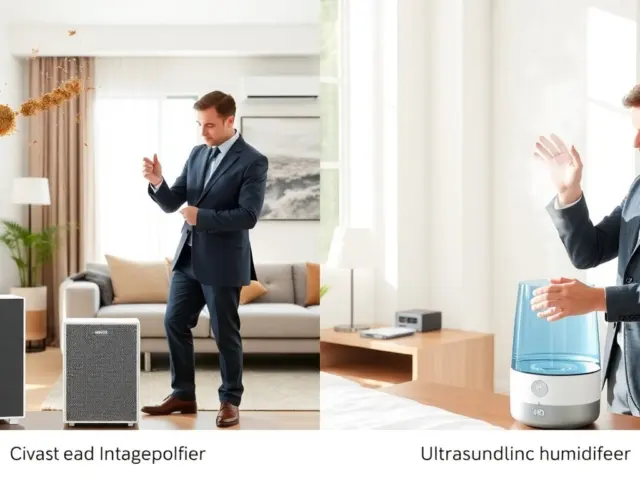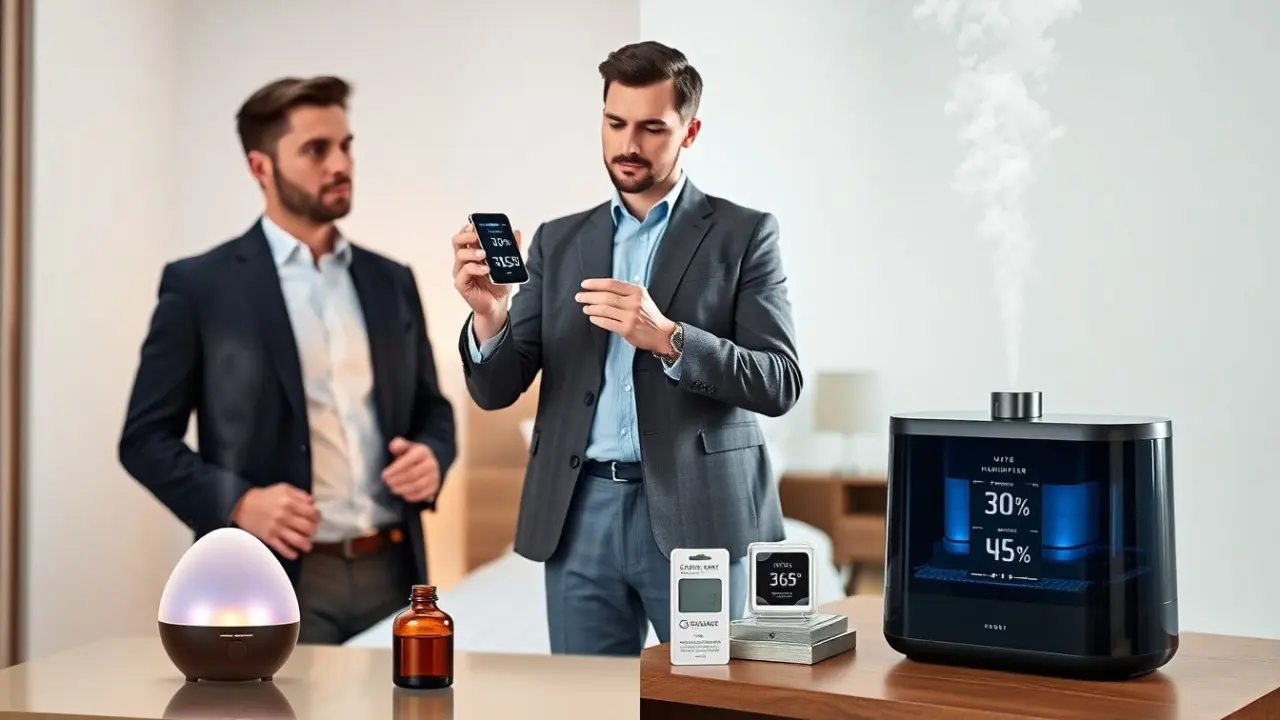
The article compares diffuser vs humidifier and helps readers pick the right device for home use in 2026. It states what each device does, who benefits, and simple safety tips. It uses clear science and practical use cases to guide the choice.
Key Takeaways
- A diffuser primarily disperses essential oils for scent and mood enhancement without significantly changing room humidity.
- A humidifier increases indoor moisture to alleviate dry skin, nasal irritation, and support respiratory comfort, especially in dry environments.
- Choose a diffuser for short-term scent benefits in small spaces like bedrooms or offices, and a humidifier for ongoing moisture control in larger areas.
- Regular cleaning is crucial: humidifiers require frequent cleaning to prevent microbial growth, while diffusers should be emptied and dried after each use and cleaned regularly.
- Safety tip: avoid adding essential oils to humidifiers unless the manufacturer explicitly allows it, and keep oils away from pets and children when using diffusers.
- When deciding between diffuser vs humidifier, match the device to your main goal—aromatherapy and scent versus air moisture and comfort—for optimal results.
How Diffusers and Humidifiers Work — The Core Differences
A diffuser releases small droplets of water mixed with essential oil (or oil evaporant) into the air to create a fragrance and mild aromatherapeutic effect. Most modern diffusers use ultrasonic vibrations to break the liquid into a fine mist, though some use heat or nebulizing mechanisms. Ultrasonic diffusers are generally quieter and use water as a carrier; nebulizers atomize pure essential oil without water and produce a stronger scent but use oil faster.
Humidifiers are designed to add moisture to indoor air. They accomplish this with different technologies: ultrasonic humidifiers vibrate a diaphragm to produce a cool mist; evaporative humidifiers blow air across a wet wick or filter; steam (warm-mist) humidifiers boil water to release warm vapor. Each approach has trade-offs in noise, energy use, and maintenance. The key measurable outcome of any humidifier is an increase in relative humidity in the room, which can be tracked with a hygrometer.
Practically, diffusers typically have small reservoirs (tens to a few hundred milliliters) and run for a few hours per fill, producing localized scent without substantially altering room humidity. Humidifiers have larger tanks (from under a liter to multiple liters) and are built to run for many hours or overnight to maintain a target humidity. The primary technical and functional distinction is therefore scent delivery and mood enhancement (diffuser) versus sustained moisture control for comfort and material preservation (humidifier).
When To Choose a Diffuser: Benefits, Best Rooms, and Use Cases
Choose a diffuser when your goal is scent, short-term aromatherapy, or masking transient odors. Common rooms for diffusers include bedrooms, small living rooms, home offices, and bathrooms. Diffusers are useful for creating a calming pre-sleep environment with lavender, promoting alertness with citrus or peppermint during work, or freshening a bathroom between deep cleans.
Diffusers are well suited for timed or intermittent use: many models offer timers, intermittent mist settings, and low power draw, making them convenient for short sessions. They are portable and usually quiet, so they work well on bedside tables, desks, or shelving. Because diffusers do not appreciably change room humidity, they are not a substitute for a humidifier when dry air is the underlying problem.
When using essential oils, pick single-note oils or carefully blended products designed for inhalation and follow dilution and usage guidance. Be mindful of occupants with respiratory issues, infants, elderly people, and pets—certain oils can be irritating or toxic to animals. Keep oil bottles capped, store out of reach, and avoid continuous, high-concentration use in small, poorly ventilated rooms. In shared spaces, choose subtle scents and lower output settings to reduce the risk of bothering others.
When To Choose a Humidifier: Benefits, Best Rooms, and Use Cases
Pick a humidifier when you need to increase indoor humidity over time for health, comfort, or to protect belongings. Bedrooms and nurseries are common places for humidifiers because they can relieve dry throat, dry nasal passages, and dry skin overnight. Living rooms and plant rooms can also benefit when central heating or dry climates drive indoor relative humidity low.
Humidifiers support several practical needs: they can help reduce static electricity, make heated rooms feel warmer at lower thermostat settings, and protect wood floors and furniture from shrinkage. People with certain upper respiratory symptoms or during cold seasons may find measurable relief when maintaining comfortable humidity levels. Use a hygrometer to monitor conditions and aim for a moderate range rather than very high humidity to avoid condensation and mold.
Different humidifier types suit different priorities: evaporative models are self-regulating to some extent (higher humidity slows evaporation), ultrasonic units are quiet and energy-efficient but may leave mineral dust if hard water is used, and warm-mist options reduce bacteria risk in the short term but use more energy and pose scalding hazards. Choose a model with easy tank access and clear cleaning instructions if daily or frequent use is expected.
Health, Safety, and Allergies: What Science Says
Scientific literature indicates that maintaining moderate indoor humidity supports mucous membrane function, which can reduce discomfort during colds and may decrease coughing and sore throats in some individuals. However, excessively high indoor humidity promotes dust mites and mold growth, which can worsen allergies and asthma. For most homes, keeping humidity in a moderate range (widely recommended by health professionals) balances these risks.
Humidifiers can improve comfort and some symptoms when used correctly, but poorly maintained units are a documented source of microbial contamination and should be cleaned and dried according to manufacturer guidance. Regular maintenance reduces the risk of dispersing bacteria or mold spores into the air.
Research on essential oils shows both potential benefits (relaxation, perceived air freshness, perhaps short-term mood effects) and risks (irritation, sensitization, or allergic reactions in some people). People with asthma or chemical sensitivities should test exposure carefully and stop use if symptoms worsen. Pets, particularly cats and birds, can be sensitive to certain oils; avoid using oils known to be harmful to specific animals and keep exposure minimal.
Overall, when comparing diffuser vs humidifier from a health perspective: humidifiers are the appliance to choose for measurable moisture-related benefits, while diffusers provide controlled scent and mood effects but are not a treatment for dry air. Both devices require responsible use—appropriate placement, monitoring, and maintenance—to deliver benefits without introducing preventable risks.
Maintenance, Cost, and Practical Buying Tips
Maintenance is a key factor in long-term performance and safety. For humidifiers, follow the manufacturer’s cleaning schedule; many devices need daily emptying of standing water, periodic deep cleaning with vinegar or manufacturer-recommended solutions, and timely filter changes if applicable. For diffusers, empty and rinse the reservoir after each use, dry it between sessions, and clean more thoroughly (with a mild vinegar solution or the method recommended by the maker) once a week or after using colored or viscous oils.
Consider cost factors beyond the purchase price: humidifiers may require replacement filters or cartridges and use more electricity if they are warm-mist models. Diffusers have low running cost but require essential oils for aromatherapy, which are ongoing consumables. Noise level, tank size (run time), coverage area, and ease of cleaning are practical purchase criteria to weigh.
Other practical tips: place humidifiers on a raised, water-resistant surface away from walls and electronics to prevent damp spots; use distilled or demineralized water in ultrasonic units if mineral dust is a concern; use a hygrometer to set and monitor targets; choose diffusers with auto-shutoff and timers if you plan to run them overnight; and read pet-safety guidance for any oils you intend to use. If you remain unsure whether to buy a diffuser vs humidifier, prioritize the primary problem you want to solve—scent and short sessions (diffuser) or sustained moisture and comfort (humidifier)—and select a model that supports safe, maintainable use.