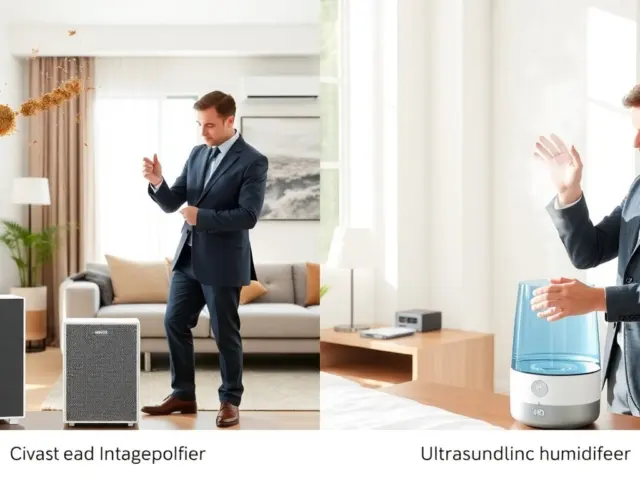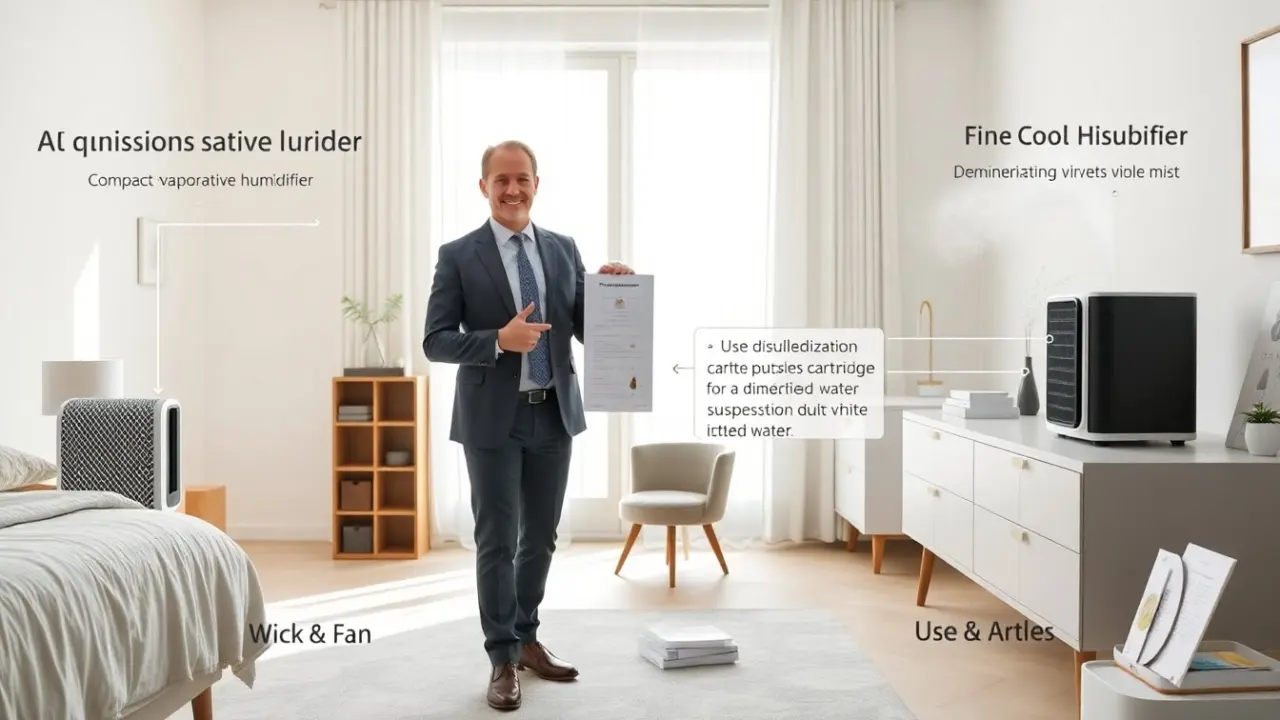
Evaporative vs ultrasonic humidifier is a common question for home buyers. This guide compares both types in clear terms. It lists how each unit works, how each performs, and how each costs. It helps people pick a suitable unit for bedrooms, nurseries, and large rooms. The reader will get direct facts and practical advice.
Key Takeaways
- Evaporative vs ultrasonic humidifier differ mainly in mist production, with evaporative using a wick and fan, and ultrasonic using high-frequency vibrations.
- Evaporative humidifiers handle hard water better by trapping minerals and producing minimal white dust, making them ideal for nurseries or hard water areas.
- Ultrasonic humidifiers operate quietly and use less energy, making them a good choice for bedrooms where noise and speed of humidifying matter.
- Maintenance for evaporative units focuses on wick replacement, while ultrasonic models require regular tank and plate cleaning, with potential need for a demineralization cartridge.
- Choosing between evaporative vs ultrasonic humidifier depends on room size, noise preference, water quality, and maintenance willingness, with both suitable for large rooms when matched correctly.
Quick Comparison At A Glance
Evaporative vs ultrasonic humidifier differs in how they make mist and in how they handle minerals. Evaporative units use a wick and fan. Ultrasonic units use a vibrating diaphragm to make a fine mist. Evaporative units lower mineral emission because the wick traps minerals. Ultrasonic units may emit white dust if you use hard water. Evaporative units often cost less for maintenance. Ultrasonic units often run quieter and use less power. Evaporative vs ultrasonic humidifier choice depends on noise preference, water quality, and ease of upkeep.
To make a quick decision: consider the room’s occupants (infants, allergy sufferers, sleepers), the home’s water hardness, and how often you want to clean the unit. If you want the least visible maintenance and have hard water, an evaporative humidifier tends to be a lower-maintenance pick. If you prioritize silent operation and faster humidity rise, an ultrasonic unit is usually the better option. Many buyers also weigh upfront cost vs ongoing consumables like replacement wicks or filters.
How Evaporative And Ultrasonic Humidifiers Work
This section explains the core mechanics of each device in simple steps.
Evaporative: Wick, Fan, And Natural Evaporation
An evaporative humidifier draws dry air through a wet wick. The fan forces air across the wick. The air picks up moisture and leaves the unit as invisible vapor. The wick captures minerals and stops them from entering the room. The device raises humidity until the air reaches equilibrium. The unit rarely makes white dust. The user must replace the wick on a set schedule. Evaporative vs ultrasonic humidifier cases show that evaporative units handle hard water better.
Typical wicks are made from a porous material that maximizes surface area; this makes evaporation efficient and self-regulating: as room humidity rises, evaporation slows naturally. Because the primary moving part is the fan rather than a high-frequency transducer, evaporative units can be slightly louder but are simple to repair. Common user tasks include checking the wick for discoloration or mold, rinsing the tank weekly, and replacing the wick according to the manufacturer’s interval.
Ultrasonic: High‑Frequency Vibrations And Mist Production
An ultrasonic humidifier vibrates a small plate at high frequency. The vibration breaks water into tiny droplets. The unit pushes the droplets out as a visible mist. The mist raises room humidity quickly. The process uses little electricity. The device can spread minerals into the air as fine dust. The user can choose cool or warm mist on some models. Evaporative vs ultrasonic humidifier comparison shows ultrasonic units act faster and quieter.
Because ultrasonic units rely on mechanical vibration, they can produce a very fine, visible mist that makes humidity changes noticeable in minutes. However, the same fine droplets can carry dissolved minerals; in homes with hard water this creates a light powder (“white dust”) on nearby surfaces unless you use distilled or demineralized water, or install a demineralization cartridge. Routine cleaning focuses on preventing biofilm in the tank and descaling the transducer plate; skipping this can reduce output or create odors.
Performance Factors: Coverage, Noise, And Energy Use
Coverage depends on tank size and mist output. Evaporative units often cover medium to large rooms with steady output. Ultrasonic units often cover similar room sizes but deliver moisture faster. Noise comes from the fan in evaporative units. Ultrasonic units run nearly silent because they lack a large fan. Energy use favors ultrasonic units. They use less power for the same humidity gain. Evaporative vs ultrasonic humidifier performance varies by model. The user should check the specs for gallons per day and room square feet.
Practical guidance: look at the advertised coverage alongside real-world indicators such as adjustable humidistat, runtime per tank, and how the manufacturer measures output (gallons per 24 hours vs ml/hr). For noise, check for decibel ratings or consumer reviews—some evaporative models are engineered for quiet operation. For energy-conscious buyers, target models with automatic shutoff and low-watt operation. Also consider cycle times: ultrasonic models can reach a target relative humidity faster, which may be useful in very dry winters or for quick relief during allergy season.
Maintenance, Cost, And Expected Lifespan
Maintenance differs by design. Evaporative units need wick replacement and periodic tank cleaning. Ultrasonic units need regular tank cleaning and occasional plate cleaning. Ultrasonic units may need a demineralization cartridge for hard water. Evaporative vs ultrasonic humidifier owners should use distilled water to cut maintenance. Parts cost less for basic evaporative models. Ultrasonic models may cost more upfront. Both types can last five to ten years with care. The user should follow the manual for cleaning frequency and part replacement.
Maintenance checklist: empty and dry the water tank daily if possible; deep-clean tanks weekly with a mild vinegar solution or manufacturer-recommended cleaner; replace wicks and filters on schedule; descale ultrasonic plates when mineral buildup appears. Cost considerations include replacement wicks, filters, and optional cartridges for ultrasonic units. While upfront costs vary, factor in ongoing consumables and electricity: ultrasonic units are often cheaper to run, but evaporative wicks and filters are inexpensive to replace. Lifespan depends on build quality and maintenance—regular cleaning and using distilled water will extend service life for both types.
Which Humidifier To Choose For Bedrooms, Nurseries, And Large Rooms
For a bedroom, the user should favor low noise. Ultrasonic units serve well in bedrooms. For a nursery, safety and low maintenance matter. Evaporative units help reduce mineral spread in a nursery. For large rooms, the user should focus on output and tank size. Both evaporative and ultrasonic models can serve large spaces if they list adequate coverage. If the water is hard, the user should pick an evaporative unit or use distilled water with an ultrasonic unit. If quiet operation matters most, the user should pick an ultrasonic unit. The buyer should match the unit to room size, noise tolerance, water quality, and willingness to maintain the device.
Practical scenarios to help decide: Bedrooms — choose an ultrasonic model with a built-in humidistat and night mode to avoid over-humidifying while you sleep. Nurseries — prioritize evaporative units or ultrasonic models used with distilled water; place the unit out of reach and follow manufacturer safety guidance on warm vs cool mist. Large rooms — consider console or whole-room units specified for larger square footage, check for higher daily output and longer runtime per fill, and position the humidifier centrally or near airflow paths for even distribution. Finally, always monitor indoor humidity with a hygrometer and keep levels within a comfortable 30–50% range to prevent mold growth or dust mite proliferation.