How to start composting at home is simple and practical. The reader will learn which method fits their yard, how to set up a bin or wormery, and how to keep compost healthy. The steps use common tools and clear actions. The reader will save waste, feed plants, and cut costs.
Key Takeaways
- Choosing the right composting method for your space and waste type makes starting composting at home easier and more effective.
- Set up your compost system in a flat, shaded spot using layers of brown and green materials, and maintain moisture like a wrung-out sponge for healthy compost.
- Regularly monitor moisture, smell, and temperature to keep your compost active and troubleshoot common issues like bad odors or pests.
- Use appropriate tools such as a pitchfork, watering can, and thermometer to aid in turning, watering, and tracking compost progress.
- Protect your compost from pests by burying food scraps, avoiding meat and oily foods, and securing bins with lids or mesh.
- Finished compost should look dark and smell earthy, providing a natural, cost-saving fertilizer to enrich your garden soil.
Choose The Right Composting Method For Your Space And Needs
Homeowners should match method to space and goals. If the yard is small, they should pick a compact bin or a wormery. If they have a large garden, they should use an open pile or a tumbler. Those who want fast results should choose a hot composting bin. Those who want low effort should choose a cold pile or a wormery.
How to start composting at home begins with a simple check. The user should note available space, shade, and access. The user should note how much kitchen waste they produce. The user should check local rules for food waste and pests. The user should measure time they can spend on turning and monitoring.
Bins fit patios and small yards. Tumblers work for people who want quick turning without touching material. Open piles suit large properties and people who do not mind occasional pests. Wormeries fit people who primarily compost kitchen scraps and who want a small, clean system.
How to start composting at home also depends on materials. If the user has lots of brown material like leaves, they should favor a pile or bin. If they have mostly fruit and vegetable scraps, a wormery will convert them fast. If the user wants finished compost in weeks, they should go hot composting and follow temperature rules. If the user prefers low work, they should accept slower breakdown and choose cold composting.
Set Up Your Compost System: Step‑By‑Step Guide For Bins, Piles, And Wormeries
How to start composting at home starts with site choice. The user should pick a flat, drained spot with partial shade. The user should place a bin or form a pile on bare soil to allow worms and microbes to enter.
For a bin, the user should assemble the unit and place coarse material at the bottom. The user should add layers of brown and green material. The user should moisten each layer until it feels like a wrung-out sponge. The user should cover fresh food scraps with a layer of dry leaves or shredded paper to reduce smell.
For a pile, the user should start with a base of twigs to aid air flow. The user should layer green and brown materials. The user should avoid compacting layers and should turn the pile every one to two weeks. The user should monitor moisture and add water if the pile dries.
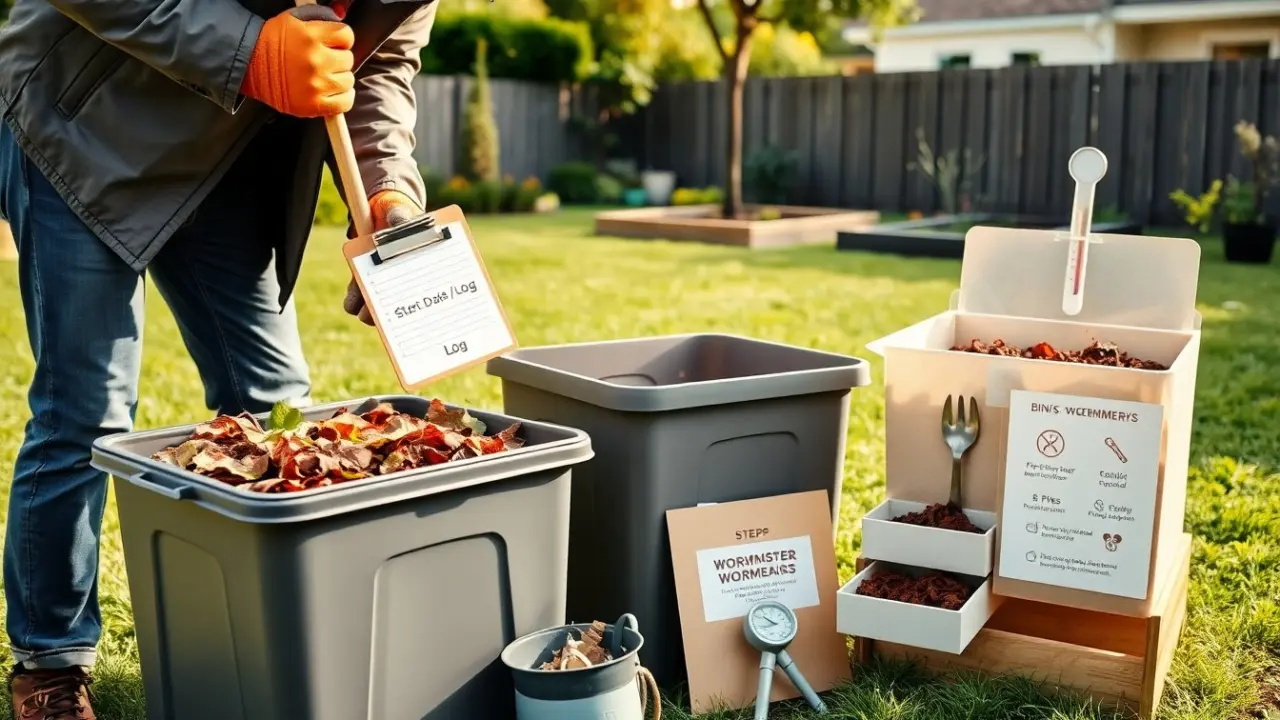
For a wormery, the user should buy compost worms (Eisenia fetida). The user should prepare bedding with shredded cardboard and a little soil. The user should add small amounts of food scraps and bury them in the bedding. The user should keep the wormery in a cool, shaded spot and avoid citrus, onion, and spicy food in large amounts.
How to start composting at home requires a few tools: a pitchfork or turning tool for bins and piles, a watering can, a kitchen scrap container, and a thermometer for hot composters. The user should keep a simple log to track additions, turns, and temperature. The user should label the system with start date so they can check progress.
Maintain Your Compost And Troubleshoot Common Problems
The user should check compost twice a week during active breakdown. The user should look for moisture, smell, and temperature. The user should keep moisture at the level of a wrung-out sponge. The user should keep the pile warm for hot composting by adding green material and turning to add air.
If the compost smells bad, the user should add dry brown material and turn the mix. The user should reduce wet food scraps and avoid meat and dairy. The user should cover fresh scraps and keep animals out with a lid or wire mesh.
If the compost is too dry, the user should add water and green material. The user should mix the pile to spread moisture. If the compost is too wet, the user should add dry brown material and turn. The user should improve drainage by adding coarse material or moving the system to a drier spot.
If pests appear, the user should secure the bin and bury food scraps under brown layers. The user should avoid feeding pests by not adding meat, bones, or oily food. If fruit flies appear, the user should cover new scraps and add more dry cover. If rodents appear, the user should use a sealed bin or a rodent-proof tumbler.
If breakdown stalls, the user should check particle size and oxygen. The user should chop large pieces and turn the pile. The user should add a handful of garden soil to reintroduce microbes. The user should check temperature. For hot composting the internal temperature should reach 131°F (55°C) for several days. If the pile never heats, the user should add more green material and insulate the pile with straw or a compost blanket.
How to start composting at home becomes easier with practice. The user should expect faster results after the first cycle. The user should test finished compost by sight and smell: it should look dark and smell earthy. The user should use finished compost to feed plants and improve soil structure.