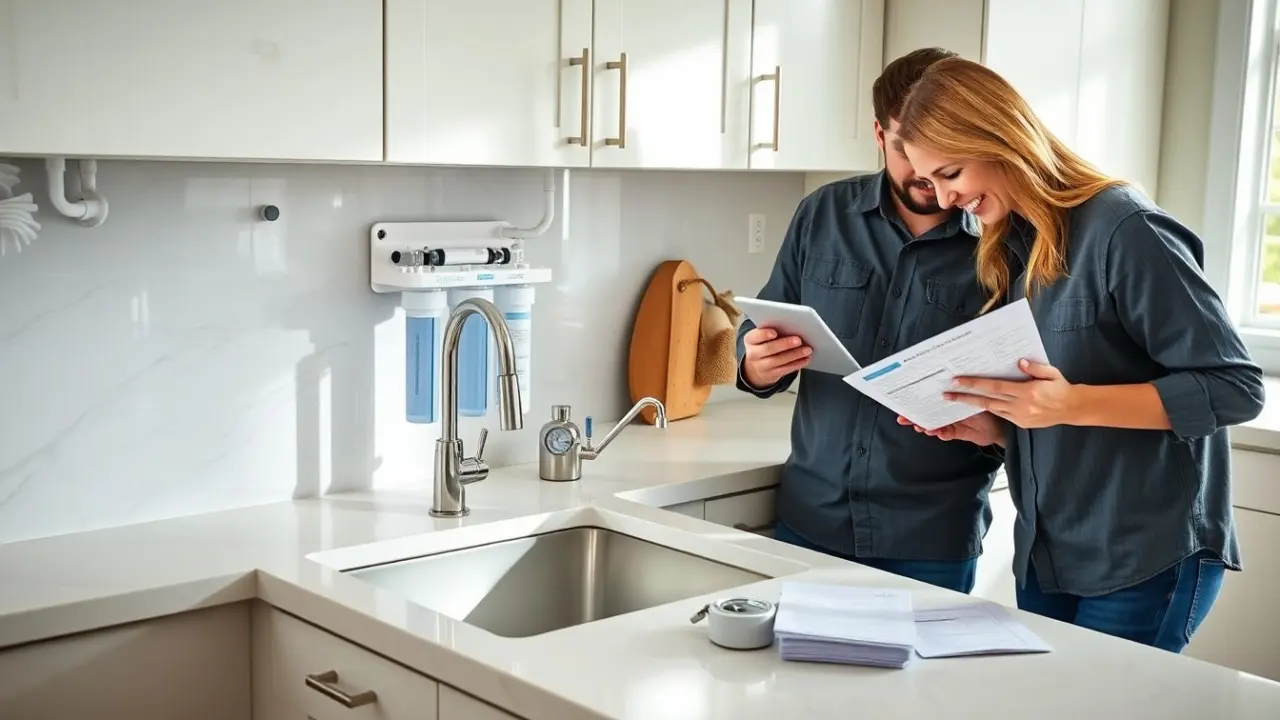
Reverse osmosis water filter systems for home provide reliable drinking water. The guide explains how reverse osmosis works, how to choose the right system, and how to install and maintain one. The text uses clear steps and plain terms. It aims to help a homeowner compare options, plan installation, and avoid common mistakes.
Key Takeaways
- Reverse osmosis water filter systems for home use pressure to push water through a semipermeable membrane that removes dissolved solids, many salts, and pesticides for clean drinking water.
- Choosing the right reverse osmosis system depends on your daily water needs, contaminant profile, system capacity, and number of filtration stages to ensure effective and efficient filtration.
- A typical home RO system includes multiple filters—sediment, carbon, RO membrane, and sometimes UV sterilizers or remineralization cartridges—based on local water quality.
- Proper installation usually involves under-sink mounting with options for professional plumbing help, while regular maintenance includes timely replacement of prefilters, membranes, and postfilters to maintain water quality.
- Monitoring filter life, system recovery rate, and sourcing certified units with NSF/ANSI standards helps ensure safe water and prolong system reliability.
- Troubleshooting common issues like low pressure, cloudy water, or off-tastes involves checking tank pressure, replacing worn parts, flushing new filters, and possibly adding UV sterilization if bacteria are detected.
How Reverse Osmosis Works And What It Removes
Reverse osmosis water filter systems for home push water through a semipermeable membrane. The system uses pressure to force water molecules through the membrane. The membrane blocks dissolved solids, many salts, and larger particles. A prefilter traps sediment and chlorine. A postfilter polishes taste after the membrane. The process reduces total dissolved solids, lead, fluoride to varying degrees, and many pesticides.
A typical home system includes a sediment filter, an activated carbon filter, the RO membrane, and a final carbon filter. The unit may include a permeate pump to cut waste water. The homeowner should note the system’s rejection rate, measured as percent of contaminants removed. The higher the rejection rate, the cleaner the output water.
Reverse osmosis removes ions and molecules larger than water. The system does not remove dissolved gases or all bacteria unless it includes a UV sterilizer. Some systems include remineralization cartridges to add calcium and magnesium back to the water. Homeowners choose remineralization for taste and to slightly raise pH. They should test water before and after installation to confirm removal rates.
A buyer should match the system to local water quality. Well water often needs a sediment prefilter and iron removal. Municipal water often needs chlorine removal before the membrane. In every case, the homeowner should read product specs and third-party test results to verify claims.
Choosing The Right Home RO System: Capacity, Stages, And Key Specs
A buyer should pick reverse osmosis water filter systems for home based on daily water use, contaminant profile, and space. The homeowner estimates daily drinking and cooking water. A family of four typically needs a system with at least a 50–75 gallon per day membrane or a storage tank of 2–4 gallons. For higher demand, they choose a higher flow membrane or an under-sink booster pump.
The number of stages matters. A three-stage system often includes sediment, carbon, and RO membrane. A five-stage system adds a second carbon and a remineralization or UV stage. The homeowner should prefer a carbon prefilter when chlorine is present. They should prefer a UV stage when bacteria or viruses appear in test results. Each extra stage adds cost and maintenance, so buyers should match stages to real needs.
Key specs to check include recovery rate, daily production, tank size, and flow rate. Recovery rate tells the homeowner how much feed water becomes filtered water. A 25–50% recovery rate is common: a higher rate reduces waste water. Daily production shows the membrane’s output in gallons per day. The flow rate indicates how fast the faucet will deliver water.
Warranty, filter life, and filter cost affect long-term value. The homeowner should compare certified systems and read customer reviews about leaks and installation. They should prefer certified units by NSF/ANSI standards for specific contaminant removal. This due diligence helps the buyer choose a system that fits budget and water needs.
Installation, Maintenance, And Common Troubleshooting Tips
Most homeowners install reverse osmosis water filter systems for home under a sink. A professional plumber can install the system in one to three hours. The basic steps include mounting the filter assembly, drilling a hole for the faucet or using an existing hole, installing the feed water saddle valve, and hooking the drain line to the sink trap. The installer connects the storage tank last and checks for leaks.
The homeowner should change prefilters every 6–12 months and the RO membrane every 2–4 years, depending on water quality and use. The postfilter often needs replacement every 6–12 months. The owner should flush new filters and sanitize the system on replacement. The owner should keep a maintenance log with dates and filter types.
Common problems include low pressure at the faucet, cloudy water, and leaks. Low pressure often means a full tank or a worn membrane. The homeowner can check tank pressure with a gauge and replace the membrane if needed. Cloudy water can result from an air trap or a new carbon filter: it usually clears after a few uses. Leaks typically occur at push-fit connections: the homeowner should push tubing fully into fittings or replace damaged tubing.
If the system produces off-taste water, the owner should test source water and filtered water. Foul tastes often come from overdue filters, a spent carbon filter, or bacterial growth. If tests show bacteria, the owner should add a UV sterilizer or seek professional service. Regular testing and timely filter changes keep the system reliable and safe.