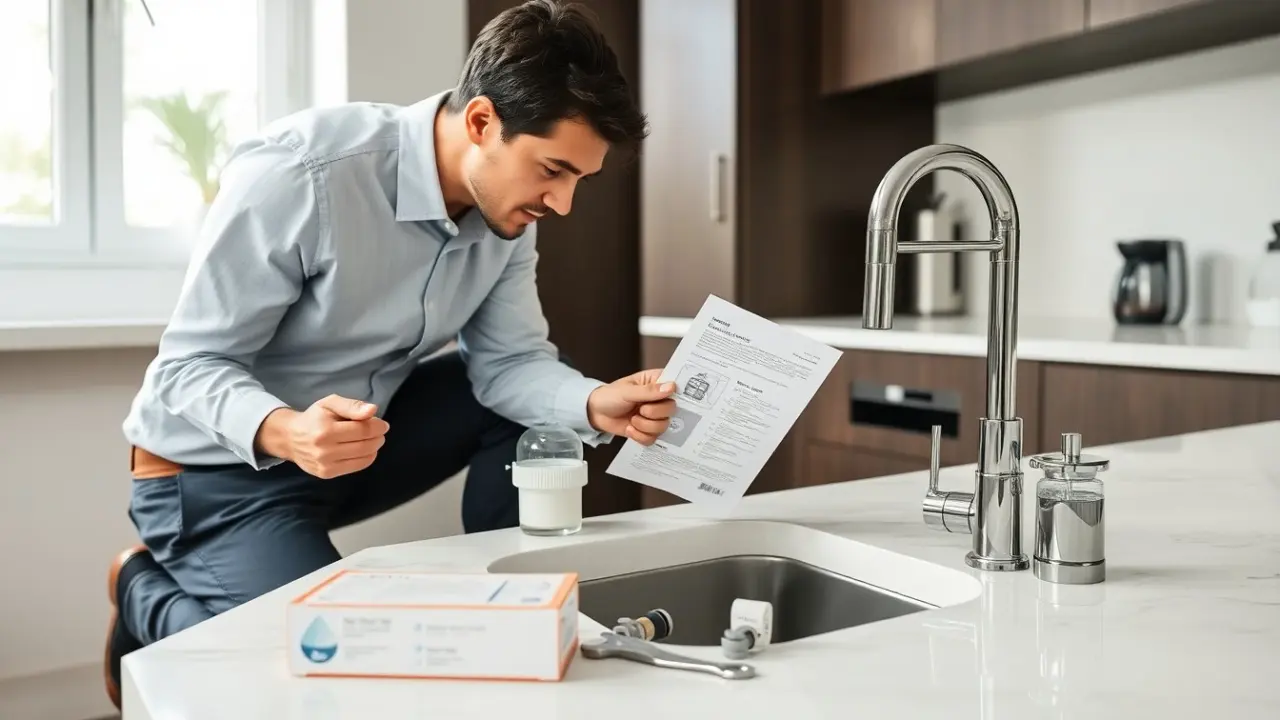
A water filter for sink helps remove contaminants that affect taste and safety. It gives clearer water for drinking and cooking. The guide explains what a sink filter removes, how to pick the right model, and how to install and maintain it. The information stays practical and direct so a homeowner can decide and act fast.
Key Takeaways
- A water filter for sink removes chlorine, sediment, lead, and some bacteria to improve water taste and safety.
- Choosing the right sink water filter depends on priorities like taste improvement, chemical removal, or comprehensive purification.
- Certification, flow rate, and maintenance costs are crucial factors when selecting a sink water filter.
- Installation varies by type, from simple faucet-mounted filters to complex reverse osmosis systems requiring plumbing work.
- Regular maintenance and timely cartridge replacements ensure continued filter performance and prevent common issues.
- Using a water filter for sink reduces reliance on bottled water, saving money and lowering plastic waste.
Why A Sink Water Filter Matters: Benefits And What It Actually Removes
A water filter for sink reduces common contaminants that appear in tap water. It treats chlorine, sediment, and bad taste. It lowers lead, mercury, and some pesticides when the filter uses activated carbon or certified media. It cuts cysts and some bacteria if the filter uses a fine membrane or NSF-certified technology.
People choose a water filter for sink to protect children and older adults. They choose it to improve coffee and cooking. The device saves money compared with bottled water. It also reduces plastic waste.
The performance depends on filter type and certification. Filters with NSF/ANSI 53 remove lead and other health-related contaminants. Filters with NSF/ANSI 42 improve taste and reduce chlorine. Filters that meet NSF/ANSI 58 use reverse osmosis to remove dissolved solids and many chemical contaminants.
Testing helps reveal local needs. A homeowner can get a water quality report from the water utility. They can also use a home test kit to check pH, hardness, and common contaminants. Once they know the problem, they can match a water filter for sink to that problem.
A water filter for sink does not remove every contaminant. It rarely removes all viruses without a specialized system. It does not address plumbing corrosion in some cases. The user should check the filter’s certifications and the claims on the label before buying.
How To Choose The Right Sink Water Filter For Your Home
A buyer should first list priorities. They should ask whether they want better taste, fewer chemicals, or near-total purification. They should then match the priorities to filter types.
Common filter types include:
- Faucet-mounted filters. They attach to the faucet and deliver filtered water on demand. They cost little and install fast. They suit renters and small budgets. They handle taste and chlorine well.
- Under-sink cartridge filters. They mount under the cabinet and connect to a dedicated faucet. They offer higher flow and larger capacity. They often use carbon blocks and may include multiple stages.
- Reverse osmosis systems. They use membranes to remove dissolved solids, fluoride, and many chemicals. They require a drain line and a storage tank. They remove the most contaminants among common home options.
- Inline and countertop systems. Inline filters fit inside the water line. Countertop filters sit beside the sink and connect to the faucet with a hose. Both work for limited space.
A buyer should check three practical factors: certification, flow rate, and maintenance cost. Certification shows the filter meets independent tests. Flow rate tells how fast water will run. Maintenance cost includes replacement filters and any needed tools.
The buyer should compare filter lifespans. Many cartridge filters serve 3–6 months. Some larger under-sink cartridges serve 6–12 months. Reverse osmosis membranes often serve 2–3 years, while prefilters still need more frequent changes.
A water filter for sink must fit the plumbing. The buyer should note faucet threads and shutoff valves. They should measure cabinet space for under-sink models. They should also check waste line access for reverse osmosis.
Budget matters. Faucet-mounted filters and countertop units offer low entry cost. Under-sink multi-stage systems and reverse osmosis cost more up front but lower long-term cost per gallon. The buyer should weigh upfront price against replacement filter cost.
Installation, Maintenance, And Troubleshooting Tips For Sink Filters
A homeowner can install many water filter for sink options with basic tools. Faucet-mounted filters often screw on without tools. Countertop systems connect with a diverter valve. Under-sink systems usually require a wrench, Teflon tape, and basic plumbing work. Reverse osmosis systems need a drain saddle and a small drill bit for a hole in the drain pipe or a saddle clamp.
The user should shut off the cold-water valve before any installation. They should relieve pressure by running the tap for a few seconds. They should read the manufacturer instructions and follow the sequence of connections.
Maintenance keeps filters working. The user should replace cartridges at the interval on the label. They should record the change date to avoid missed replacements. They should flush new filters as instructed to remove loose carbon dust.
A homeowner should check for leaks after installation. They should inspect fittings and tighten them if needed. They should replace worn washers and use Teflon tape on threaded joints where the seal leaks.
Common problems and fixes:
- Low flow: The filter may be clogged. The user should replace the cartridge or membrane. They should also check the shutoff valve and the supply line for obstructions.
- Bad taste after install: The filter may need more flushing. The user should run the filter for the time the manual recommends.
- Frequent clogging: The source water may have high sediment. The user should add a sediment prefilter or increase the frequency of cartridge changes.
- Leaks: The user should tighten connections and replace worn parts. If leaks persist, they should shut off water and contact customer service.
A homeowner should keep spare cartridges on hand for busy households. They should store spares in a cool, dry place. They should follow disposal rules for used filters. Some manufacturers offer recycling programs.