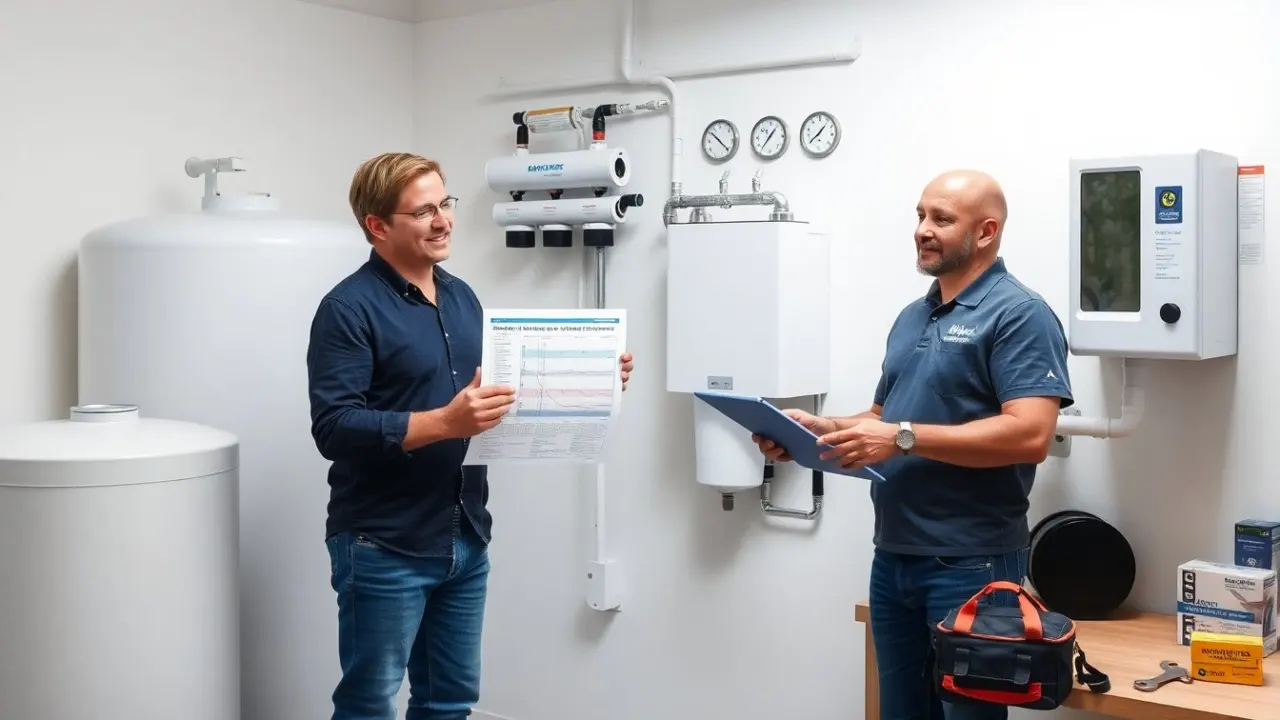
People should test their water before they buy a water filter system for well water. The homeowner should collect a sample and send it to a lab. The lab will report bacteria, iron, manganese, hardness, and nitrate levels. The report will guide the choice of a filter. The guide below shows signs, filter types, costs, and upkeep steps.
Key Takeaways
- Testing well water through a certified lab is essential to identify contaminants and select the appropriate water filter system for well water.
- Signs like metallic taste, sulfur smell, stains, or health symptoms indicate the need for water treatment and prompt testing.
- Match the water filter type—sediment, carbon, oxidation, UV, or reverse osmosis—to the specific contaminants found in your well water.
- Install whole-house systems after the pressure tank with professional help, while point-of-use filters can often be DIY-installed.
- Regular maintenance, including timely cartridge replacements and UV lamp cleaning, is crucial to ensure your water filter system for well water performs effectively.
- Budget for initial installation and ongoing costs like filter replacements, testing, and service to maintain safe and clean well water.
Signs Your Well Water Needs Treatment And How To Test It
Homeowners will notice clear signs when a water filter system for well water becomes necessary. The tap may taste metallic. The water may smell like sulfur. The water may leave yellow, brown, or red stains on fixtures. The water may cloud or deposit scale on kettles and pipes. The user may see sudden health symptoms after drinking the water.
A simple start is a home test kit. A homeowner can test pH, hardness, and basic iron with a kit. A home kit will not detect all contaminants. The homeowner should send a sample to a certified lab for a full analysis. The lab will test for bacteria, coliforms, E. coli, nitrate, lead, arsenic, iron, manganese, and dissolved solids.
The homeowner should test the water annually. The homeowner should test after heavy rain, flooding, or nearby construction. The homeowner should test after changing plumbing or a pump. The lab report will list concentrations and compare results to safe limits. The homeowner can match those results to the correct water filter system for well water.
Choosing The Right Filtration System: Sediment, Carbon, Reverse Osmosis, And More
The homeowner should match filter type to the lab results. A basic sediment filter will trap sand, silt, and rust. A sediment filter will protect downstream equipment and improve flow. A carbon filter will reduce bad taste, chlorine (if present), and some organic compounds. Carbon will not remove dissolved minerals, iron, or nitrate.
If iron or manganese appears at moderate levels, the homeowner should choose a greensand or catalytic filter or an oxidation filter. These filters will convert dissolved iron into particles and then remove them. For bacteria or viruses, the homeowner should choose UV disinfection or a certified point-of-use system that removes microbes. UV will not remove chemicals or particles.
For high dissolved solids, nitrate, or fluoride, the homeowner should choose reverse osmosis. Reverse osmosis will remove many dissolved ions and will produce near-pure water at a point-of-use faucet. The homeowner should note that reverse osmosis wastes some water and lowers mineral content.
If hardness appears, the homeowner should consider a water softener. A softener will replace calcium and magnesium with sodium or potassium. The homeowner should avoid installing a softener before a reverse osmosis unit without proper configuration. The homeowner can combine sediment, carbon, and RO in a multi-stage water filter system for well water to address multiple issues.
Installation, Maintenance, And Cost Considerations For Well Water Systems
The homeowner should plan installation with the system size and location in mind. A whole-house water filter system for well water will go at the main line after the pressure tank. A point-of-use system will go under a sink or at a single faucet. The homeowner should hire a licensed plumber for whole-house installs. DIY can work for simple under-sink or inline filters.
Maintenance affects performance and cost. The homeowner should replace sediment and carbon cartridges on the schedule the maker recommends. The homeowner should clean and replace UV lamps yearly and change prefilters before RO membranes. The homeowner should check the system for leaks and pressure drops monthly.
Costs vary by type and capacity. A basic sediment or carbon system can cost $100 to $600 installed. Iron filters and UV systems typically range $800 to $2,500 installed. Reverse osmosis systems range $200 to $2,000 for point-of-use and $2,000-plus for whole-house variants that include storage and pumps. The homeowner should include ongoing costs for replacement filters, media, and electricity.
The homeowner should budget for testing, service, and parts. The homeowner should compare warranties, certification (NSF/ANSI), and local service options. The homeowner should choose a system with clear instructions and easy access to parts. A well-chosen water filter system for well water will reduce health risk and protect plumbing when the homeowner follows the lab data and the maintenance schedule.